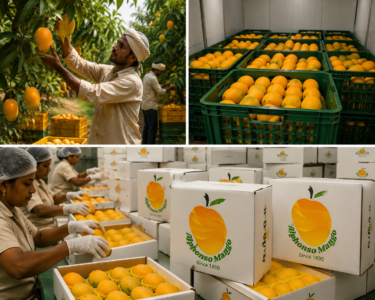
Ratnagiri or Devgad Alphonso Mango – Which Is Better? The Ultimate Hapus Guide
Every summer, as the scorching Indian sun signals the peak of tropical indulgence, a sweet, irresistible debate grips fruit lovers, culinary enthusiasts, and luxury epicures worldwide: Ratnagiri or Devgad alphonso mango – which is better? Known universally as Hapus, the Alphonso mango reigns supreme as the undisputed “King of Mangoes.” Renowned for its buttery smooth, fiberless flesh, saffron-golden hue, and intoxicating aroma that fills an entire room, Alphonso is not just a seasonal fruit—it is a cultural phenomenon and a gourmet obsession.
However, true connoisseurs know that not all Alphonso mangoes are created equal. The iconic fruit achieves its highest peak of quality in the coastal Konkan belt of Maharashtra, India. Within this narrow coastal strip, two hubs stand out as rival titans of production: Ratnagiri and Devgad. While both produce authentic, Geographical Indication (GI) tagged Alphonso mangoes, subtle microclimatic variations, soil compositions, and geographical topographies yield distinct characteristics in the fruit harvested from each region.
Whether you are ordering your annual box of seasonal Hapus, sending a gift carton to family abroad, or simply curious about what sets these two legendary variants apart, this comprehensive guide explores every dimension of the great Ratnagiri or Devgad alphonso mango debate.
- The Legacy of the Hapus: What Makes Coastal Maharashtra Special?
To understand the debate between Ratnagiri and Devgad, one must first understand why the Konkan coast produces the world’s finest Alphonso mangoes. The Alphonso tree, introduced to India by Portuguese explorer Afonso de Albuquerque via grafting techniques in the 16th century, found its perfect home along the Arabian Sea shoreline.
The combination of laterite soil rich in minerals, warm coastal winds carrying sea salt, high humidity, and steep basaltic hill slopes creates a unique terroir that cannot be replicated anywhere else on earth. While Alphonso mangoes are now cultivated in Gujarat, Karnataka, and other regions, the authentic taste, rich aroma, and melt-in-the-mouth texture belong exclusively to the GI-tagged belt of Maharashtra—specifically Ratnagiri, Sindhudurg (Devgad), Raigad, and Thane.
- Devgad Alphonso Mango: Characteristics & Profile
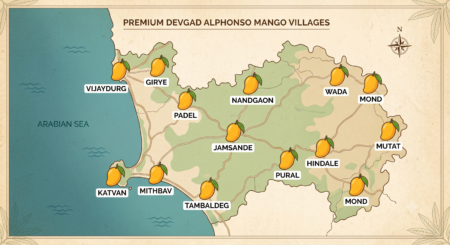
Devgad is a small coastal taluka in the Sindhudurg district of southern Maharashtra. Despite its modest geographical size, Devgad has earned legendary status among mango purists for producing what many consider the most refined Alphonso in the market.
Geographical Terroir & Soil
Devgad features rocky coastal terrain, high mineral content in red laterite rocks, and direct exposure to saline sea breezes from the Arabian Sea. The orchards in Devgad are often perched right along sea cliffs and coastal hillocks.
Physical Appearance & Skin
One of the most notable visual markers of an authentic Devgad Hapus is its thin, golden-yellow skin. The skin is delicate, smooth, and turns a brilliant, uniform canary-saffron color when fully ripe. Because of the thin skin, the fruit often shows subtle natural spots or slight pressure marks, which experienced buyers recognize as a sign of natural ripening rather than a defect.
Flavor Profile & Aroma
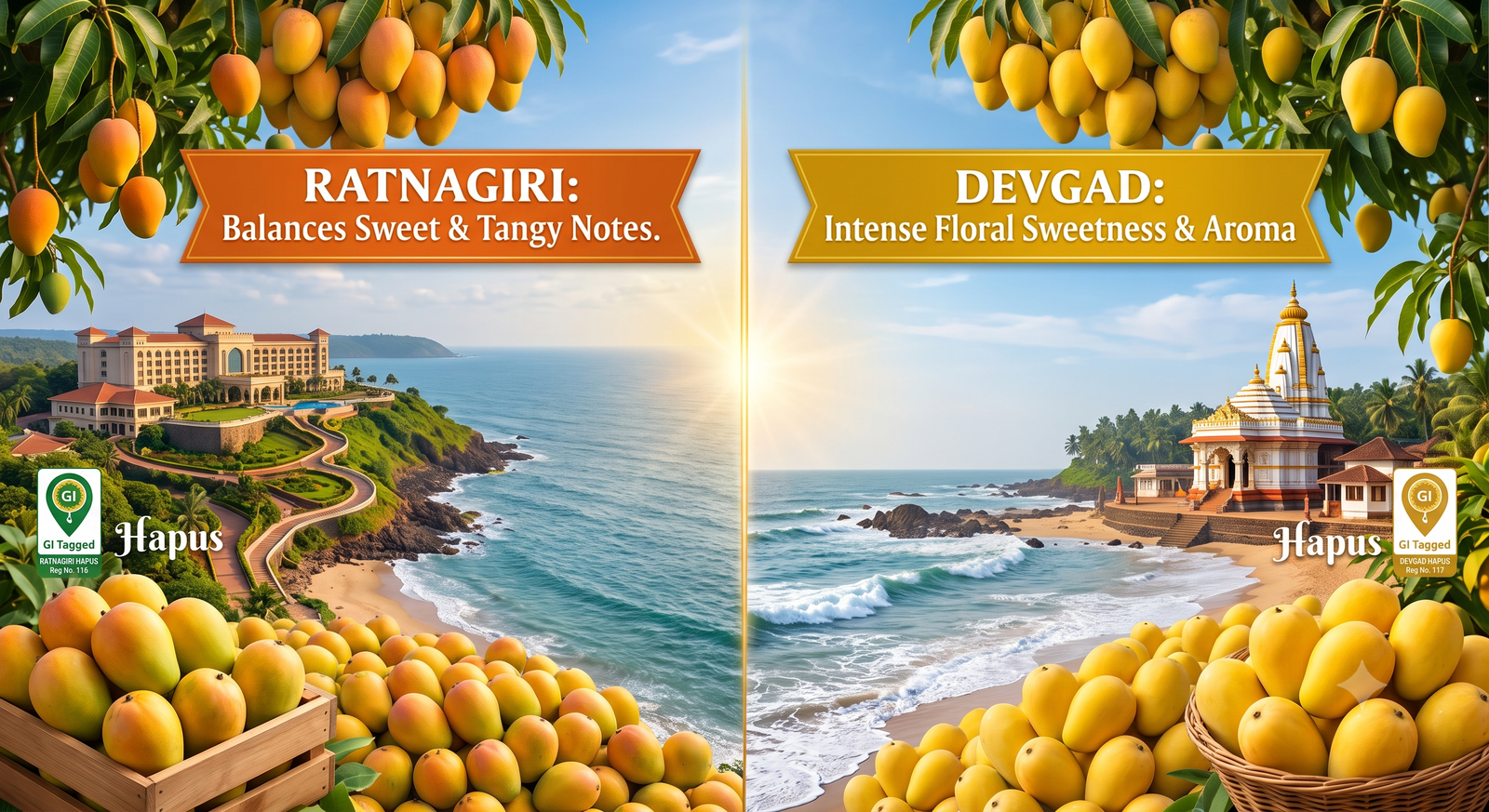
Devgad Alphonso is celebrated for its intense, sweet flavor profile balanced with subtle floral undertones. The sweetness is immediate and rich, accompanied by an extremely sweet, penetrating aroma. The pulp is vivid orange-saffron, completely fiberless, and offers a silky, luxurious mouthfeel.
Key Distinguishing Features of Devgad Hapus:
- Skin Thickness: Very thin and delicate skin.
- Aroma: Exceptionally strong, sweet floral fragrance that lingers.
- Taste: Consistently sweet with minimal acidity; rich honeyed notes.
- Yield Season: Slightly earlier harvest cycle (starting late February/March).
- Ratnagiri Alphonso Mango: Characteristics & Profile
Located further north along the Konkan coast, Ratnagiri is the massive historical powerhouse of Alphonso production. The name “Ratnagiri Hapus” is so deeply embedded in Indian culture that it has become synonymous with premium quality mangoes across global markets.
Geographical Terroir & Soil
Ratnagiri covers a broader geography encompassing diverse microclimates—from coastal orchards to inland valley plantations. The soil is deep laterite clay mixed with organic humus, retaining balanced moisture levels throughout dry winter and hot spring months.
Physical Appearance & Skin
In contrast to Devgad, the Ratnagiri Alphonso features a slightly thicker skin. When ripe, it develops an enchanting gradient from deep golden-yellow to rich saffron-orange, often carrying a mild greenish blush near the stem even when perfectly sweet inside.
Flavor Profile & Aroma
Ratnagiri mangoes are renowned for their complex, well-rounded flavor profile. While remarkably sweet, a Ratnagiri Hapus retains a microscopic trace of pleasing tangy citrus undertone, which creates a sophisticated taste balance. The pulp is thick, incredibly rich, dark orange, and holds a firm yet creamy structure that makes it fantastic for both fresh eating and traditional dessert preparation like Aamras.
Key Distinguishing Features of Ratnagiri Hapus:
- Skin Thickness: Slightly thicker skin, offering better transportability and longer shelf life.
- Aroma: Warm, rich, deep mango fragrance.
- Taste: Perfect balance of sweet and subtle tangy undertones.
- Yield Season: Peak harvest runs from April through late May.
- Head-to-Head Comparison: Ratnagiri vs Devgad
When deciding whether Ratnagiri or Devgad alphonso mango suits your personal taste, comparing their core attributes side-by-side reveals clear distinctions:
| Feature | Devgad Alphonso Mango | Ratnagiri Alphonso Mango |
| Skin Thickness | Thin, soft, and smooth | Slightly thicker and more resilient |
| Color & Shade | Bright yellow to saffron uniform shade | Golden yellow with deep orange tint |
| Flavor Profile | Intensely sweet, floral, low acidity | Richly sweet with balanced tangy notes |
| Pulp Texture | Ultra-silky, delicate, soft creaminess | Thick, smooth, dense, firm creaminess |
| Shelf Life | Shorter (7–10 days post-ripening) | Slightly longer (10–14 days post-ripening) |
| Aroma Profile | Intense, penetrating, floral sweetness | Deep, warm, traditional tropical aroma |
| Availability Peak | March to Mid-May | April to Late May / Early June |
| Market Price | Premium / Higher (due to lower volume) | Slightly more competitive (larger volume) |
- Sensory Nuances: Taste, Aroma, and Texture Deep-Dive
If you perform a blind taste test between a ripe Devgad and a ripe Ratnagiri Hapus, you will notice subtle sensory variations:
- The First Bite: Devgad Alphonso delivers an immediate explosion of pure, unadulterated sweetness on the tip of your tongue. Because the skin is thin, the pulp near the skin is just as sweet as the center core. On the other hand, Ratnagiri Alphonso offers a layered flavor experience—starting with a deep, rich mango sweetness followed by a pleasant, complex body that coats the palate.
- The Aroma Test: Place a box of Devgad mangoes in your living room, and the sweet floral perfume will saturate the entire home within hours. Ratnagiri mangoes also possess a strong aroma, but it leans toward a warmer, Earthier fruit essence.
- Culinary Performance: If you are making classic Indian Aamras (pureed mango pulp), Ratnagiri is often favored by traditional chefs because its slightly firmer pulp and balanced acidity yield a thicker, more vibrant puree that pairs perfectly with warm puris. For slicing and serving raw as a luxury dessert, Devgad’s melt-in-your-mouth delicacy is unmatched.
- GI Tag & Spotting Counterfeits: How to Ensure Authenticity
Due to the immense popularity and premium pricing of both Ratnagiri and Devgad Alphonso, the market is unfortunately flooded with lookalikes—such as Karnataka Alphonso (often chemically ripened), South Indian varieties, or hybrids passed off as genuine Hapus.
Important Buyer Tip: Both Ratnagiri and Devgad Alphonso mangoes possess official Geographical Indication (GI) Tags registered with the Government of India. Authentic sellers provide a QR code or GI registration number on their packaging boxes that allows you to trace the exact farmer and orchard location in Konkan.
How to Identify Genuine Hapus vs. Counterfeits:
- Natural Color Variation: Chemically ripened mangoes look unnaturally bright yellow without any color gradient. Naturally tree-ripened Hapus from Ratnagiri or Devgad exhibits a soft transition from light green-yellow to deep golden orange.
- Wrinkle Pattern: As genuine Alphonso ripens, its skin develops natural, fine wrinkles. Fake or chemically forced mangoes remain stiff, smooth, and shiny even as they spoil inside.
- Aroma from Stem: Smell the stem (top end) of the fruit. Genuine Hapus emits a sweet fragrance even when unripened. Chemically treated fruits smell like raw grass or chemical solvents (like calcium carbide).
- Fiber Check: Authentic Devgad and Ratnagiri Hapus have zero visible fibers when cut. If you find stringy fibers sticking to your teeth, it is not a pure Konkan Alphonso.
- Price Comparison & Availability
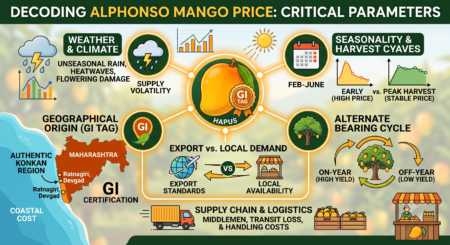
Price is another factor buyers consider when deciding on Ratnagiri or Devgad alphonso mango. Generally, Devgad Alphonso commands a 10% to 20% price premium over Ratnagiri Alphonso. Why?
- Geographical Limitations: Devgad is a smaller geographical zone with limited total arable land, leading to lower total production volume compared to the vast Ratnagiri district.
- High Demand & Fragility: Because Devgad mangoes have thinner skin, transport losses are slightly higher, making pristine, undamaged crates rarer and more prized.
- Early Arrival Advantage: Devgad orchards often flower and yield fruit slightly earlier in the season, capturing early market premium rates in March.
- Final Verdict: Which One Should You Buy?
So, coming back to the main question: Ratnagiri or Devgad alphonso mango – which is better?
The truth is, neither is objectively “better”—it comes down entirely to your personal palate and culinary preference:
- Choose Devgad Alphonso if: You love intense, uncompromised sweetness, a delicate thin skin, ultra-soft melting pulp, and an overpowering floral fragrance. It is ideal for luxury gifting and fresh dessert plating.
- Choose Ratnagiri Alphonso if: You prefer a balanced, rich flavor with a subtle hint of complexity, slightly firmer pulp structure, excellent shelf life, and traditional suitability for making thick Aamras.
Pro Tip for Mango Lovers: Don’t limit yourself to just one! The best approach is to enjoy Devgad Alphonso early in the season (March to April) when its harvest is at its peak, and switch to Ratnagiri Alphonso mid-to-late season (April to May) when Ratnagiri fruit reaches peak maturity and sweetness.