The Ultimate Sourcing & Terroir Guide to the Authentic Devgad Alphonso Mango
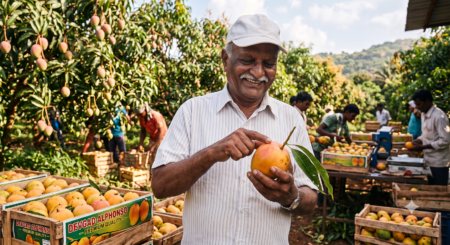
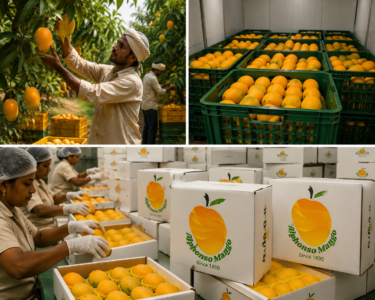
When fruit lovers around the world speak of the “King of Mangoes,” they are talking about the Devgad Alphonso Mango (locally celebrated as Devgad Hapus). Nestled along the emerald coast of the Sindhudurg district in Maharashtra, Devgad Taluka is globally revered as the holy grail of tropical horticulture.
What transforms a standard fruit into the legendary Devgad Hapus? It isn’t just the genetic strain — it is the irreplaceable terroir. The unique confluence of nutrient-dense red laterite stone, salty sea breezes, and sharp diurnal temperature swings creates an unmistakable sensory profile: a deep saffron flesh, an intoxicating floral aroma, and a silky, fibre-free texture.
Whether you are a fruit enthusiast seeking absolute authenticity or a premium brand mapping out direct farm-sourcing, understanding the microclimates across Devgad’s famous agricultural villages is key to finding the absolute best yield.
The Terroir Formula: Why Devgad Alphonso Mangoes Stand Alone
Not all Alphonso mangoes are created equal. Even within the Konkan belt, the fruit grown specifically in Devgad commands a distinct premium. The secret lies in a perfect storm of environmental factors:
1. “Jambha” (Red Laterite) Rock Soil
The topsoil in Devgad is dominated by porous red laterite rock, locally known as Jambha. This stone-rich ground provides phenomenal drainage, forcing mango roots to dig deep into rock crevices for moisture and minerals. This natural root stress concentrates sugar compounds inside the developing fruit rather than diluting them with excessive water.
2. Arabian Sea Coastal Winds
Orchards sitting near the coast benefit from aerosolized sea minerals carried by daily maritime breezes. These salty winds help build rich essential oils in the skin and pulp, giving the Devgad Alphonso its signature intoxicating scent that fills an entire room long before the fruit is cut.
3. High Diurnal Temperature Variation
During crucial growth weeks between January and April, Devgad experiences warm, sun-lit days paired with cool, crisp coastal nights. This significant day-to-night thermal shift triggers optimal starch-to-sugar conversion, yielding sweetness levels up to 20–22° Brix in peak harvest weeks.
Quality Metrics: The Anatomy of a Devgad Hapus
When you cut into an authentic Devgad Alphonso Mango, you should expect five hallmark characteristics:
| Attribute | Devgad Hapus Standard | Why It Matters |
| Sweetness | 20–22° Brix (Peak Season) | Unmatched natural richness without artificial harshness |
| Aroma | Intense, sweet, floral-musky | Instantly noticeable even through natural skin packaging |
| Texture | 100% Fibre-Free | Smooth, velvet-like melt-in-the-mouth mouthfeel |
| Flesh Color | Deep Saffron-Orange | Rich in natural carotenoids and vitamin reserves |
| Shelf Life | High stability under natural ripening | Resists rapid decay when tree-ripened without chemicals |
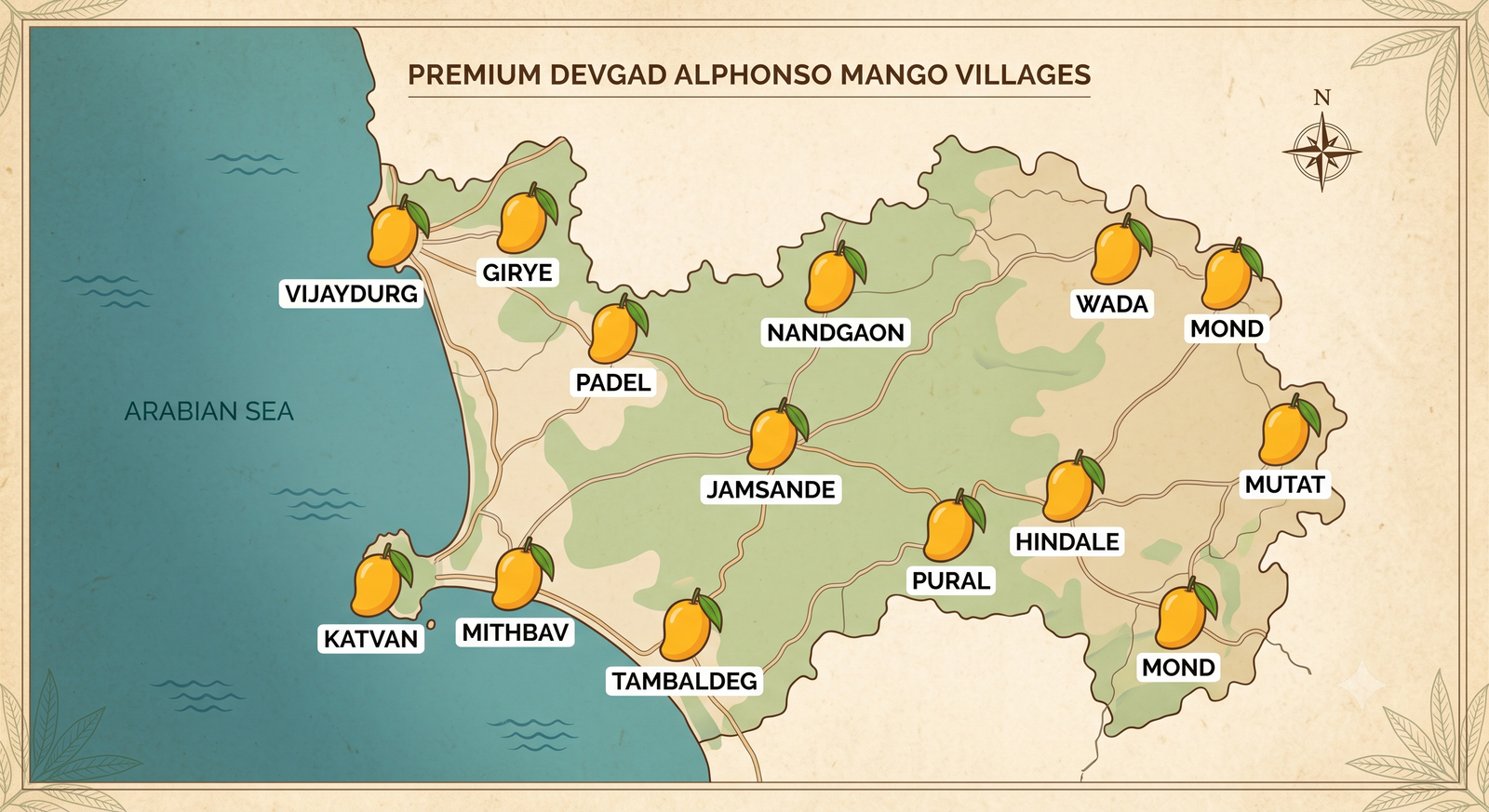
The Top 13 Villages for Authentic Devgad Alphonso Mangoes
Devgad Taluka comprises several coastal and inland villages, each offering subtle variations in fruit maturity rates, skin thickness, and flavor nuance. Growers and seasoned wholesale traders recognize 13 key villages as the golden standard for authentic production.
The Elite Four: Sourcing Gold Standards
1. Vijaydurg
-
Geographical Advantage: Located on the northern coastal tip near the historic Vijaydurg Fort.
-
Specialty & Flavor Profile: Widely considered the absolute premier location for sourcing. Orchards directly face the Arabian Sea, resulting in a distinct mineral richness. Vijaydurg Hapus is famous for its early-season maturity, exceptionally thin skin, intense saffron pulp, and sweetness reaching 22° Brix.
2. Mithbav
-
Geographical Advantage: Pristine coastal pocket surrounded by white sand beaches and low laterite hills.
-
Specialty & Flavor Profile: Famous for producing fruit with an unforgettable perfume. The high salinity in the coastal breeze keeps the trees healthy and free of excessive foliage moisture, yielding fruit with a thick, creamy consistency and zero stringy fibre.
3. Padel
-
Geographical Advantage: Situated slightly inland on elevated laterite plateaus (Sada).
-
Specialty & Flavor Profile: Padel orchards enjoy maximum sunlight exposure on flat rocky terrain. The heat retention of the laterite rock creates a uniform ripening environment, making Padel mangoes famous for consistent size, vibrant golden skin, and dependable shelf life during long-distance transit.
4. Katvan
-
Geographical Advantage: High elevation coastal valley with well-drained rocky slopes.
-
Specialty & Flavor Profile: Katvan produces Alphonso mangoes with a rich, buttery mouthfeel and deep orange flesh. The microclimate here yields fruit that resists internal breakdown (“sponge tissue”) better than almost any other region, making it a favorite for export.
Prime Agricultural Hubs in Devgad
5. Nandgaon
-
Specialty: Located along key transport channels, Nandgaon combines tradition with disciplined post-harvest sorting. Its mangoes feature a balanced sweet-acid balance with excellent rind strength.
6. Girye
-
Specialty: Neighboring Vijaydurg, Girye shares the intense maritime microclimate. Fruit from Girye is celebrated for its radiant color, fragrant peel, and high sugar concentration late in the early-harvest window.
7. Tambaldeg
-
Specialty: Tucked along a serene beach strip, Tambaldeg’s sandy-laterite soil hybrid produces fruit with an ultra-smooth, delicate pulp and mild floral undertones.
8. Jamsande
-
Specialty: As a central trade hub within Devgad, Jamsande’s surrounding orchards produce large, beautifully shaped fruit known for uniform shape and classic golden blush.
9. Pural
-
Specialty: Pural’s orchards are known for deep root networks in older groves, resulting in highly concentrated flavors and dense, heavy fruit packed with rich juice.
Inland & Valley Specialties
10. Hindale
-
Specialty: Protected by surrounding hills, Hindale orchards produce mid-to-late season crops with thick skin, robust transit tolerance, and a sweet, wholesome flavor profile.
11. Wada
-
Specialty: Known for traditional farming households that practice careful hand-plucking (Zapata method). Wada Alphonso mangoes maintain clean, blemish-free skin and natural bloom.
12. Mond
-
Specialty: Nestled along riverine backwaters, Mond provides nutrient-rich soil pockets that yield juicy, rich fruit with high liquid content, ideal for fresh pulp extraction.
13. Mutat
-
Specialty: Located in the eastern inland corridor, Mutat acts as a reliable source for late-season Hapus. As coastal yields taper off, Mutat orchards supply sweet, late-harvest fruit to extend market availability.
B2B & Direct Sourcing Priority Hierarchy
For online brands, exporters, and direct-to-consumer luxury retailers, sourcing location directly dictates customer satisfaction, repeat order rates, and transit damage resilience.
To maximize brand reputation and ensure top-tier product quality, consider this recommended sourcing order:
Tier 1 (Highest Premium & Market Demand) └── 1. Vijaydurg └── 2. Mithbav └── 3. Padel └── 4. Katvan Tier 2 (High Consistency & Visual Appeal) └── 5. Nandgaon └── 6. Girye Tier 3 (Volume Sourcing & Late Season Continuity) └── 7. Tambaldeg / Jamsande / Pural / Hindale / Wada / Mond / MutatHow to Spot Authentic Devgad Alphonso Mangoes
Because of the high value associated with the Devgad Alphonso Mango, counterfeit fruit from other regions often floods the market. Here is how to verify true Devgad origin:
-
Natural Wrinkling during Ripening: Chemical-ripened mangoes turn a uniform bright yellow while remaining hard. Authentic Devgad Hapus ripens slowly, showing soft skin with gentle natural wrinkles as its natural sugars develop.
-
Persistent Scent: A genuine Devgad Hapus emits its sweet aroma constantly, even while unpeeled and cold.
-
Coloring Progression: The skin transitions from a deep matte green to a warm, soft yellow with occasional reddish-orange blushes near the stem.
-
Softness at the Top: When gently pressed near the stem end, a naturally ripened Devgad mango yields softly to light pressure.
Conclusion: Securing the Heritage Taste
The Devgad Alphonso Mango is more than just fruit — it is an agricultural masterpiece forged by the unique ecology of Sindhudurg’s coastline. From the sea-breeze-washed groves of Vijaydurg and Mithbav to the sunny rocky plateaus of Padel and Katvan, each village brings its own distinct charm to this prized harvest.
By choosing verified, village-traceable Devgad Hapus, consumers and businesses support sustainable coastal farming families while enjoying the world’s finest expression of mango perfection.