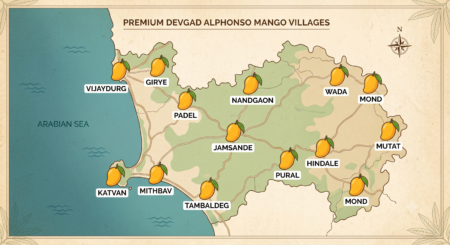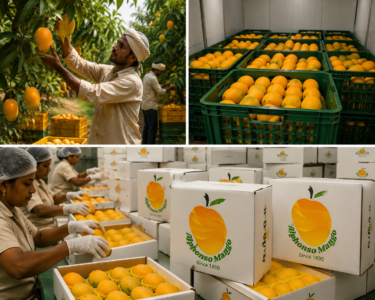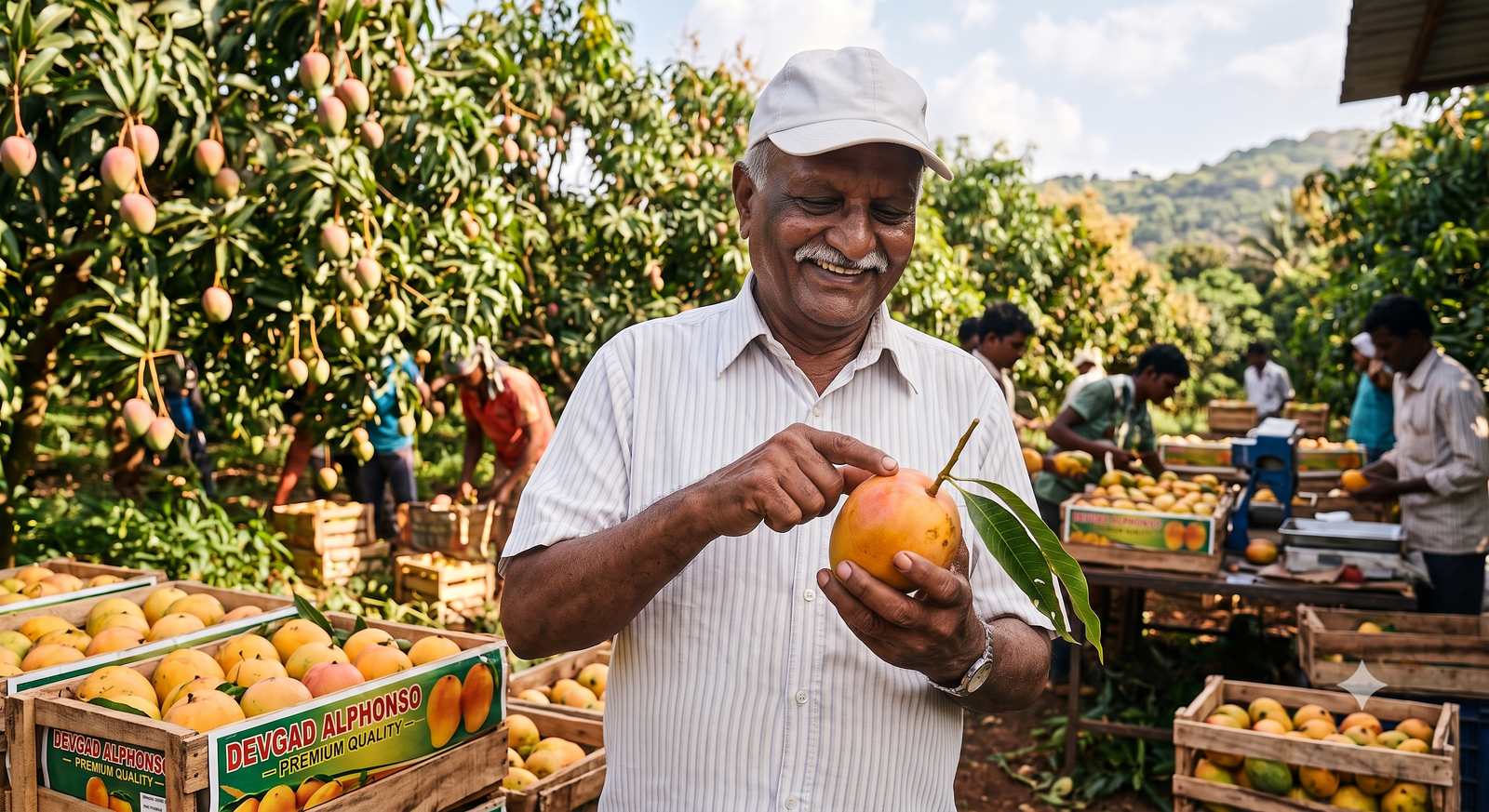
In the sun-drenched coastal orchards of Devgad and the historic belt of Vijaydurg, harvesting the “King of Mangoes” is not an automated industrial process. It is an art form honed over generations. While industrial orchards rely strictly on visual inspection or arbitrary picking schedules, authentic Konkan farmers engage all their senses before plucking a single fruit from the tree.
When you order Alphonso mangoes online, you expect pristine saffron flesh, a fiberless melt-in-the-mouth texture, and that unforgettable coastal aroma. Achieving that consistency requires more than luck. It demands a time-honored acoustic assessment known among Konkan orchardists as the Tap Test, paired with the irreplaceable microclimate of the Konkan coastline.
The Acoustic Science: What Is the Alphonso Tap Test?
Long before advanced food-testing laboratories began measuring Brix levels and pulp density, Konkan mango growers discovered that an Alphonso communicates its internal maturity through acoustic resonance.
The Tap Test is a non-destructive, tactile evaluation performed by skilled harvesters directly on the tree. By lightly tapping the fruit near its shoulder with their knuckles or fingertips, farmers listen to the vibration that ripples through the skin, pulp, and stone.
+-----------------------------------------------------------------------+ | ACOUSTIC TAP PROFILE | +--------------------------+-----------------------+--------------------+ | Sound Resonance | Internal State | Harvest Decision | +--------------------------+-----------------------+--------------------+ | Sharp, Ringing, Metallic | High water, low sugar | Leave on branch | | Hollow, Echoing | Spongy tissue risk | Discard/Secondary | | Deep, Grounded Thud | High density, mature | Harvest for export | +--------------------------+-----------------------+--------------------+ 1. Decoding Sound Frequencies: Pitch vs. Pulp Density
A mango’s internal composition shifts dramatically during its final stages of growth:
-
High-Pitched or Ringing Tone: If tapping the fruit produces a bright, high-frequency sound, the cellular structure is still rigid and filled with excess free water rather than accumulated natural starches. These mangoes are immature; if harvested now, they will turn sour, wrinkle on transit, and fail to develop the iconic Hapus fragrance.
-
Deep, Muffled, Grounded Thud: A dense, low-frequency sound indicates that the mango has converted complex starches into concentrated sugars and dense, buttery pulp. The cellular walls are robust, and the internal air pockets have closed. This dull thud is the green light for harvesting.
2. Detecting Internal Cavities and Spongy Tissue
One of the most elusive challenges with Alphonso mangoes is Spongy Tissue Disorder—a physiological condition where a portion of the pulp near the stone remains pale, acidic, and unripened. While the outer peel looks flawless, the internal cavity develops an abnormal pocket.
Master farmers at Devgad use the Tap Test specifically to detect this defect. An irregular internal cavity dampens vibrations unevenly, creating a split or hollow echo instead of a uniform, solid resonance. By weeding out defective fruit at the branch level, sellers guarantee that when you order Alphonso mangoes online, your box contains only solid, export-grade produce.
3. The Stem Connection and Vibration Stability
The shoulder and stem cavity (naka) serve as the acoustic anchor of the mango. During the Tap Test, harvesters observe how energy radiates from the stem:
-
A mature fruit possesses a firm, rounded shoulder that sits slightly higher than the stem base.
-
When tapped, the stem area absorbs the vibration cleanly without loose wobbling.
-
This grounded response indicates that the sap flow has naturally tapered, meaning the fruit has received maximum nourishment from the tree and is ready for post-harvest maturation.
The Vijaydurg-Devgad Microclimate Advantage
The Tap Test ensures harvesting precision, but the raw flavor, sugar density, and shelf life are dictated entirely by geography. The neighboring coastal belts of Devgad and Vijaydurg represent the gold standard of Indian Alphonso cultivation.
[ Arabian Sea Breeze: High Salinity & Trace Iodine ] │ ▼ [ Porous Laterite Rock Formations: High Iron, Low Stagnation ] │ ▼ [ High Diurnal Temp Shift: Warm Coastal Days + Cool Saline Nights ] │ ▼ Result: Thick Peel Integrity, Concentrated Brix, Long Transit Life 1. The Laterite Rock Bed of Vijaydurg
The terrain of the Vijaydurg peninsula is dominated by red laterite rock (Jambha dagad). Unlike alluvial soil plains where trees encounter waterlogged roots, laterite rock forces mango tree roots deep into rocky fissures. This terrain offers two distinct benefits:
-
Zero Water Retention: The rock drains excess moisture immediately, preventing fruit from absorbing diluted water weight. This concentrates the natural fructose levels.
-
Mineral Richness: The laterite matrix is naturally rich in iron and aluminum oxides, which directly influences the deep, saffron-orange pigmentation of the fruit’s pulp.
2. Arabian Sea Brine & Maritime Winds
Vijaydurg is flanked directly by the Arabian Sea on three sides. Throughout the fruiting season (January to May), the orchards are washed by saline-rich sea breezes carrying airborne potassium, magnesium, and trace iodine. This maritime exposure acts as a natural foliar nutrient spray, enhancing peel thickness and infusing the skin with natural resilience against transit wear.
3. The Diurnal Temperature Differential
The narrow coastal shelf between Vijaydurg fort and the Devgad hills creates high diurnal temperature shifts. Warm, sunny afternoons trigger intense photosynthesis and sugar synthesis, while crisp, sea-cooled nights slow down vegetative respiration. This diurnal balance locks in the characteristic aromatic ester compounds—such as lactone and furanone—giving the authentic Konkan Hapus its unmistakable, room-filling perfume.
Microclimate & Quality Matrix: Konkan vs. Non-Coastal Regions
| Environmental Parameter | Devgad & Vijaydurg Coastal Belt | Inland / Non-Coastal Growing Belts | Direct Consumer Impact |
| Soil Architecture | Porous Laterite Stone (Jambha) | Deep Alluvial Clay / Loam | Concentrated Brix (high natural sugar) without watery, diluted pulp. |
| Air Composition | Saline Maritime Breeze (Potassium/Iodine) | Dry Continental Air | Thicker peel resilience; lower risk of transit bruising during shipping. |
| Aroma Compounds | High concentration of Monoterpenes & Lactones | Moderate to low aroma profiles | Intoxicating, room-filling fragrance evident before peeling. |
| Harvest Selection | Sensory Tap Test + Manual Grading | Bulk Mechanical / Visual Pick | Zero premature harvesting; uniform ripening across the batch. |
| Transit Durability | Retains cellular structure for 8–12 days | Softens rapidly within 3–5 days | Arrives intact when you order Alphonso mangoes online nationwide. |
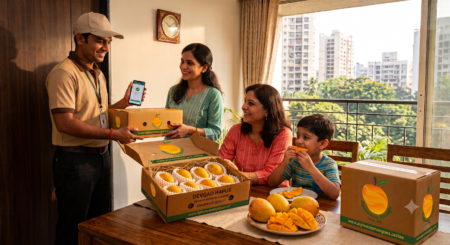
Farm-to-Doorstep: Delivering Across India Without Cold-Chain Damage
Transporting delicate, tree-ripened Alphonso mangoes from Konkan coastal orchards to major cities across India—from Guwahati to Kochi—requires an uncompromised supply-chain protocol.
[ Tree-Side Tap Test ] ──► [ Natural Desapping ] ──► [ Vedic Hay Grass Curing ] │ ▼ [ Doorstep Delivery ] ◄─── [ 24-48 Hr Air Cargo ] ◄─── [ Corrugated Cushion Pack ] -
Tree-Side Tap Selection: Every mango is tapped and hand-harvested in early morning hours before the coastal sun heats the fruit surface.
-
Desapping Protocol: The fruit is inverted on special racks to allow acidic stem sap to drain completely, preventing skin blemishes (sap burn).
-
Natural Ripening Chambers: Mangoes are nested in chemical-free, natural paddy straw (hay grass). This allows the fruit to breathe and ripen under its own natural ethylene gas production.
-
Transit Packaging: Individual cellular foam nets and moisture-resistant, multi-ply corrugated cartons cushion against vibrations during inter-state transit.
-
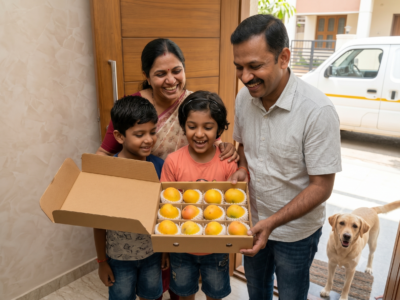
Express Dispatch: Dispatched via direct express air-cargo routes, ensuring deliveries land in Delhi NCR, Bengaluru, Hyderabad, Kolkata, or Jaipur within 24 to 48 hours from packing.
How to Perform the Tap Test at Home
When your shipment arrives, you can verify the internal condition of your fruit using the same acoustic principles practiced in the orchards.
[ Step 1: Clean & Unbox ] Gently unwrap the fruit from netting │ ▼ [ Step 2: Knuckle Tap Test ] Tap 1 cm below the shoulder/stem │ ┌─────────────┴─────────────┐ ▼ ▼ [ Dull, Dense Thud ] [ Sharp, Ringing Note ] │ │ ▼ ▼ [ Fully Ripe ] [ Semi-Mature ] Refrigerate for 30 mins Keep in Hay/Box at Room Temp and serve fresh! for 24-48 hours. -
Step 1: Hold the mango gently in the palm of your hand without squeezing the flesh.
-
Step 2: Use your index fingertip or a light knuckle tap to strike the shoulder area approximately 1 centimeter below the stem.
-
Step 3: Listen carefully:
-
Sharp, crisp tone: The core is still firming up. Leave the mango inside the original carton or wrapped in brown paper at room temperature for another 24 to 48 hours.
-
Soft, deep, grounded thud: The pulp is buttery, rich in natural sugars, and at its flavor peak. It is ready for consumption.
-
Bringing Konkan Heritage to Your Table
The difference between an ordinary mango and an unforgettable culinary experience lies in the meticulous details: the minerals inside Vijaydurg’s laterite rock, the morning sea winds of Devgad, and the generationally refined ears of harvesters performing the Tap Test.
When you order Alphonso mangoes online, you bypass wholesale market middlemen, carbide-ripening hazards, and mixed-grade assortments. Instead, you receive authentic, GI-certified Konkan Hapus harvested with traditional expertise and packed with absolute care.
Frequently Asked Questions
Why should I order Alphonso mangoes online rather than buy from local markets?
Local wholesale markets frequently mix premium Konkan Hapus with cheaper lookalikes from other states. Furthermore, local markets often use artificial ripening chemicals like calcium carbide to force early color. Ordering directly from specialized Konkan growers ensures 100% carbide-free, naturally hay-ripened, GI-tagged produce.
How does the climate of Vijaydurg affect the mango’s shelf life during delivery?
Vijaydurg’s high salinity and laterite rock produce fruit with thicker skin and firmer cell walls. This natural structural integrity allows the mango to endure inter-state transit across India without collapsing or developing premature soft spots.
Should I wash or refrigerate my Alphonso mangoes immediately upon arrival?
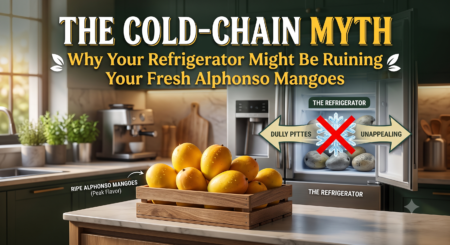
Do not wash or refrigerate mangoes that are still firm or greenish-yellow. Keep them in a dry, ventilated room at ambient temperature until they turn golden-saffron and pass the Tap Test. Once fully ripe, you can refrigerate them for up to a week to extend shelf life.